
War Risk Surcharge Imposed as Middle East Shipping Tensions Rise
Hapag Lloyd Announces War Risk Surcharge
Global container shipping company Hapag-Lloyd has announced the implementation of a War Risk Surcharge WRSfor cargo shipments traveling through high risk areas in the Middle East. The decision comes amid escalating geopolitical tensions and a series of maritime security incidents affecting key shipping lanes.
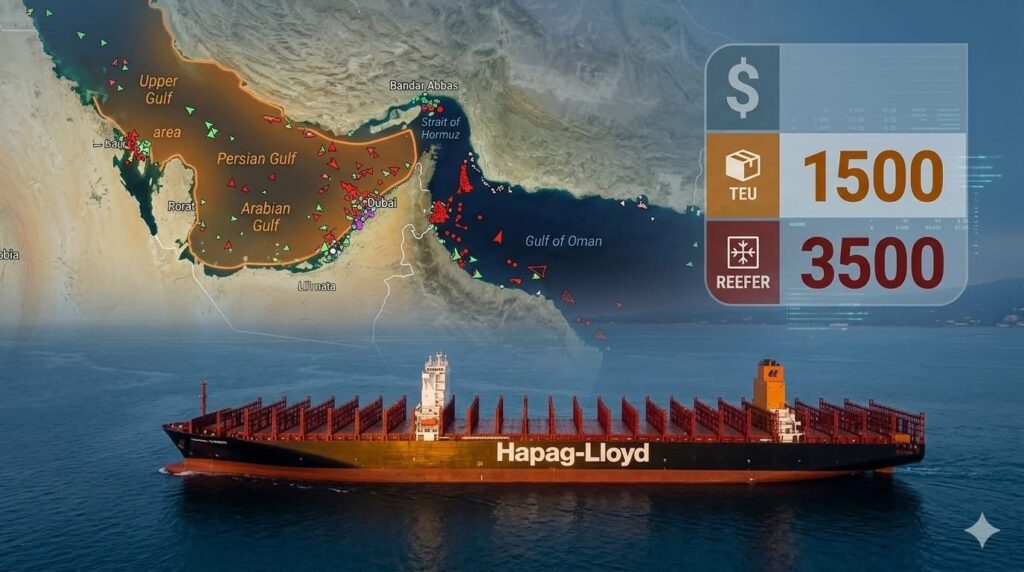
The War Risk Surcharge will apply to shipments entering or leaving the Upper Gulf, Persian Gulf and Arabian Gulf regions where shipping companies are currently facing increased insurance premiums due to heightened security risks.
According to the announcement, the surcharge aims to offset the rapidly rising cost of war risk insurance which has surged following recent attacks on commercial vessels and growing instability across strategic maritime corridors.
The implementation of the War Risk Surcharge highlights the growing pressure on international shipping companies to maintain operational safety while navigating one of the most sensitive maritime zones in the world.
Rising Tensions in Middle East Shipping Routes
Shipping routes in the Middle East have become increasingly volatile following a series of attacks involving commercial vessels and oil infrastructure in the region. The situation has intensified security concerns across the global maritime industry.
The strategic waterway Strait of Hormuz which connects the Persian Gulf to international waters remains one of the most critical energy transportation corridors in the world.
Approximately twenty percent of global oil shipments pass through this narrow channel every day making it a crucial route for global energy markets and international logistics.
Recent incidents involving cargo vessels and tankers have prompted shipping companies to strengthen security protocols and reassess operational risks in the region. As geopolitical tensions escalate maritime operators must balance the need for continued trade flows with the necessity of protecting vessels and crew.
Industry analysts note that the introduction of the War Risk Surcharge reflects a broader trend in the shipping sector where geopolitical conflicts directly influence freight costs and maritime insurance rates.
Details of the War Risk Surcharge WRS
Under the new policy introduced by Hapag Lloyd, the War Risk Surcharge will apply to cargo bookings made starting March 2 2026 and will remain in effect until further notice.
The surcharge structure has been defined as follows.
War Risk Surcharge WRS Rates
• Standard containers 1500 USD per TEU
• Reefer containers and special equipment 3500 USD per container
These additional costs will apply to shipments traveling through designated high risk areas in the Upper Gulf Persian Gulf and Arabian Gulf.
Important Conditions
Several key conditions accompany the implementation of the War Risk Surcharge.
• The surcharge must be paid by the booking party responsible for the shipment.
• The fee applies to cargo bookings made on or after March 2 2026.
• The surcharge also applies to cargo already on the water that has not yet been unloaded or has not been loaded within the affected Gulf regions.
• Shipments governed under FMC or SSE regulatory frameworks are exempt from the surcharge.
This policy adjustment reflects the significant increase in maritime insurance premiums associated with operating in high risk conflict zones.
Impact on Global Logistics and Supply Chains
The introduction of the War Risk Surcharge is expected to have ripple effects across global supply chains. For freight forwarders importers and exporters the surcharge represents a significant increase in transportation costs for goods moving through the Middle East.
Shipping experts warn that these additional charges could lead to higher freight rates for industries reliant on Gulf region trade routes including energy petrochemicals manufacturing components and consumer goods.
For logistics providers the War Risk Surcharge may also influence routing decisions as companies evaluate alternative shipping corridors to minimize exposure to conflict zones.
However avoiding the Gulf region entirely is often impractical due to its importance in global energy exports and container shipping connectivity.
Strategic Shipping Routes Under Pressure
The Middle East remains a critical hub in global maritime logistics linking trade flows between Asia Europe and Africa. Ports across the Gulf region serve as major transshipment and energy export centers.
As tensions escalate shipping companies must continuously reassess operational risks. The rising cost of insurance and security measures has already forced some carriers to increase surcharges or implement temporary route adjustments.
The War Risk Surcharge introduced by Hapag Lloyd demonstrates how geopolitical instability can quickly translate into operational costs for global logistics networks.
Industry observers believe that additional shipping lines may soon introduce similar surcharges if the security situation continues to deteriorate.
Industry Outlook and Shipping Security Measures
Maritime security experts expect shipping companies to implement stricter risk management protocols in response to recent incidents.
These measures may include
• Enhanced vessel monitoring and route tracking
• Increased naval escort cooperation in high risk waters
• Adjustments to insurance coverage and cargo risk assessments
• Temporary suspension of certain shipping routes during high risk periods
While the War Risk Surcharge helps offset immediate financial risks for carriers the broader challenge remains maintaining stable global shipping operations during geopolitical uncertainty.
For now the global logistics industry continues to monitor developments closely as tensions in the Middle East threaten to disrupt one of the most important maritime corridors in the world.
